Ashlar masonry is one of the most refined and durable forms of stone construction in the world. When you see a building made of perfectly aligned rectangular stone blocks with clean horizontal lines and almost invisible mortar joints, you are most likely looking at ashlar masonry.
This method of construction has been used for thousands of years in monuments, temples, castles, and government buildings. Today, it continues to play an important role in commercial and institutional construction because of its strength, longevity, and premium appearance.
In this guide, we’ll explore what ashlar masonry is, its types, advantages and disadvantages, how it compares to other masonry systems, and where it is commonly used in modern construction.
What Is Ashlar Masonry?
Ashlar masonry is a type of stone masonry in which stones are cut, dressed, and shaped into uniform rectangular blocks. These blocks are laid in horizontal courses with very thin mortar joints, typically less than 3 mm thick.
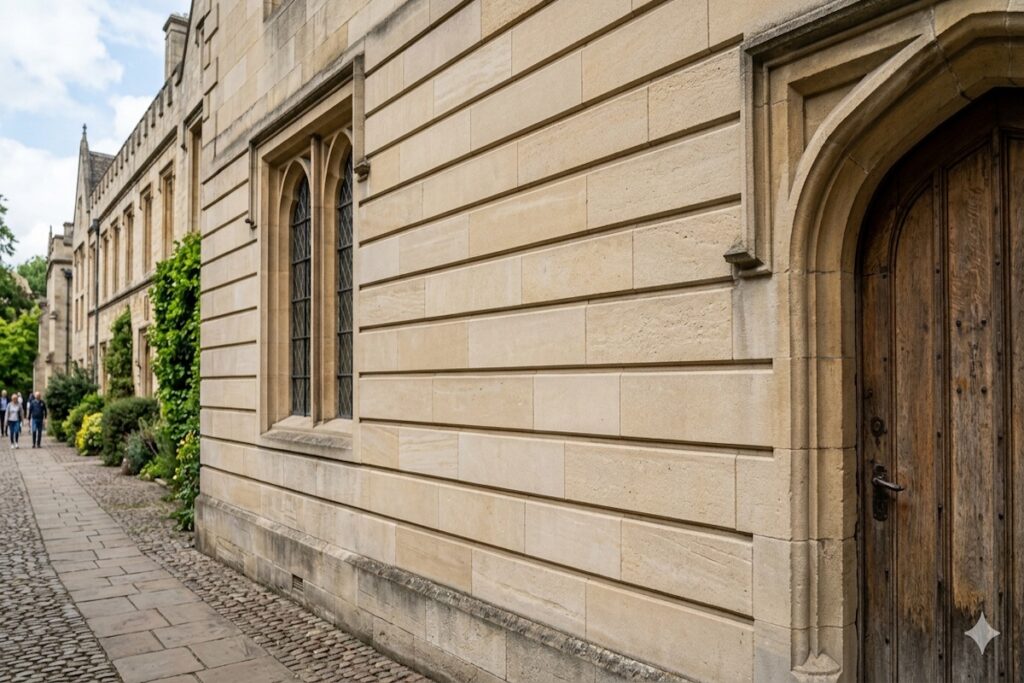
The key idea behind ashlar masonry is precision. Each stone is carefully shaped so that it fits tightly with the surrounding stones. This creates a smooth, symmetrical, and highly finished appearance.
Unlike irregular stone construction, where stones vary in size and shape, ashlar masonry focuses on uniformity and alignment. The result is a wall that looks clean, structured, and architecturally refined.
In simple terms, ashlar masonry is high-quality stone construction using carefully dressed stone blocks.
Key Characteristics of Ashlar Masonry
Ashlar masonry stands out because of its craftsmanship and structural performance. Some of its defining characteristics include:
- Rectangular stone blocks cut to uniform dimensions
- Smooth or carefully finished surfaces
- Thin mortar joints that enhance precision
- Straight horizontal courses
- Strong bonding between units
- Elegant, formal appearance
Because the stones are shaped with great accuracy, the mortar is not used to compensate for irregularities. Instead, it serves mainly as a bonding agent. This is why skilled labor is essential in ashlar construction.
Historical Background of Ashlar Masonry
Ashlar masonry has been used for centuries in some of the most impressive architectural structures ever built.
Ancient Egyptian builders used precisely cut stone blocks in temples and pyramids. Greek architects relied on ashlar techniques for temples and civic buildings. Roman engineers advanced stone construction methods in aqueducts, amphitheaters, and public structures. During medieval times, castles and cathedrals across Europe were built using dressed stone blocks arranged in neat courses.
These structures still stand today, demonstrating the exceptional durability of ashlar masonry. Historically, it was often reserved for important buildings because it required skilled artisans and high-quality materials. It symbolized strength, stability, and permanence.
Even in modern construction, ashlar masonry carries that same sense of prestige and long-term value.
Types of Ashlar Masonry
Ashlar masonry is not limited to one uniform finish. Several variations exist, each offering a distinct aesthetic and functional purpose.
Ashlar Fine Masonry
Ashlar fine masonry represents the highest level of finish. Stones are fully dressed on all visible faces, creating an extremely smooth and consistent surface.
This type is typically used in premium commercial and institutional buildings where visual precision is essential. The mortar joints are minimal, and the overall effect is sleek and formal.
Ashlar Rough-Tooled Masonry
In this type, the stone edges are neatly dressed while the face of the stone retains slight tooling marks. This provides a textured surface without sacrificing structural precision.
It offers a balance between refined appearance and natural character, making it suitable for exterior facades that require both durability and aesthetic appeal.
Ashlar Rock-Faced Masonry
Rock-faced ashlar masonry keeps the outer surface of the stone rough and natural while dressing the margins smoothly. This creates strong visual contrast and shadow lines.
It is often used in exterior walls to achieve a bold and rustic architectural style while maintaining structural strength.
Ashlar Chamfered Masonry
Chamfered ashlar masonry features beveled or sloped edges along the margins of the stone blocks. These chamfers create decorative lines and depth in the wall surface.
This type is commonly seen in formal facades and government buildings where architectural detailing enhances visual impact.
Ashlar Block-in-Course Masonry
In this variation, stones may vary in height but are laid in consistent horizontal courses. This produces a rhythmic and structured pattern.
It is often used in large-scale commercial construction where uniform alignment is required across expansive wall surfaces.
Ashlar Facing Masonry
Ashlar facing masonry uses a thin layer of dressed stone on the exterior, backed by brick or concrete blocks.
This approach reduces overall construction cost while maintaining the premium appearance of ashlar stone. It is widely used in modern commercial buildings where budget considerations are important but architectural aesthetics remain a priority.
Materials Used in Ashlar Masonry
The choice of stone significantly influences durability, appearance, and cost.
Granite is extremely strong and resistant to weathering, making it suitable for high-load and exterior applications. Limestone is easier to shape and is widely used in architectural projects. Sandstone offers attractive texture and moderate strength, while marble is typically used in decorative applications due to its polished finish.
Selecting the right stone depends on several factors, including structural requirements, climate conditions, budget, and architectural goals. In commercial construction, long-term performance and maintenance considerations often guide material selection.
Construction Process of Ashlar Masonry
Ashlar masonry requires careful planning and skilled execution.
The process begins with quarrying large stone blocks. These blocks are then cut and dressed into precise rectangular shapes. Surface finishing techniques depend on the desired type of ashlar.
Before laying the stones, a strong and level foundation is prepared. Stones are placed carefully in horizontal courses. Mortar is applied sparingly because the stones fit closely together. Constant alignment checks ensure straight courses and consistent joints.
Because of the precision involved, experienced masons and proper supervision are critical. Any misalignment can affect both appearance and structural performance.
Advantages of Ashlar Masonry
One of the greatest strengths of ashlar masonry is its structural durability. Properly constructed stone walls can withstand heavy loads and harsh environmental conditions for decades, even centuries.
Its aesthetic appeal is another major advantage. The clean lines and symmetrical blocks create a professional and prestigious appearance that enhances commercial and institutional buildings.
Ashlar masonry also offers excellent resistance to weather, fire, and pests. Over time, it typically requires minimal maintenance compared to other masonry systems.
Although initial costs are higher, its long lifespan often makes it a cost-effective investment in the long term.
Disadvantages of Ashlar Masonry
Despite its advantages, ashlar masonry has some limitations.
The most significant drawback is cost. Dressing stones, transporting heavy materials, and employing skilled labor increase initial expenses.
Construction is also slower compared to brick or concrete block masonry because precision takes time.
Additionally, stone is heavy, which means foundations must be designed to handle significant loads. This can add to overall project costs.
Uses of Ashlar Masonry in Modern Construction
Ashlar masonry continues to be used in modern projects, especially where durability and architectural presence are important.
In commercial buildings, it enhances office complexes, hotels, and corporate headquarters. Its strong visual appeal helps reinforce brand identity and property value.
Government and institutional structures often rely on ashlar masonry because it reflects permanence and reliability. Museums, universities, and courthouses frequently use dressed stone facades.
In residential architecture, ashlar masonry appears in luxury homes, boundary walls, and entrance features.
It is also common in landscaping projects such as retaining walls and monumental gateways, where both strength and aesthetics matter.
Ashlar Masonry vs Other Masonry Systems
Compared to brick masonry, ashlar masonry offers superior durability and a more refined appearance but comes at a higher cost.
Concrete block masonry is faster and more economical, yet it cannot match the elegance and longevity of natural stone construction.
Stone veneer systems provide decorative appeal but lack the structural strength of true ashlar masonry.
Choosing the right system depends on project goals, budget, and long-term expectations.
Is Ashlar Masonry Worth the Investment?
For projects that demand longevity, architectural excellence, and structural strength, ashlar masonry is often worth the investment.
While upfront costs may be higher, the long-term durability and reduced maintenance requirements can offset initial expenses. For commercial property owners, it can also increase perceived value and marketability.
When properly designed and constructed, ashlar masonry delivers both performance and prestige.
Conclusion
Ashlar masonry represents one of the highest standards in stone construction. Its precise rectangular blocks, thin mortar joints, and clean horizontal lines create a timeless architectural statement. From ancient monuments to modern commercial buildings, it has proven its strength, durability, and aesthetic value.
However, achieving successful results with ashlar masonry requires experience, proper design, and expert craftsmanship.
At Leidal & Hart, we understand that masonry is not just about materials — it’s about structural integrity, long-term performance, and delivering quality that stands for generations. Our team works closely with commercial clients to evaluate masonry systems, select appropriate materials, and ensure proper execution from foundation to finish.
Whether you’re planning a new commercial development or upgrading an existing structure, we’re committed to delivering durable, high-performance masonry solutions that combine strength with architectural excellence.