Commercial masonry work does not have one fixed price. A small mortar repair at ground level may cost much less than a multi-story tuckpointing project, facade restoration, parapet repair, or structural wall repair.
The final cost depends on the building, material, access, repair area, and damage level. In Michigan, weather also plays a major role. Freeze-thaw cycles, snow, ice, rain, wind, and deicing salts can wear down brick, block, stone, mortar joints, coping, and exterior wall systems over time.
For early budgeting, public cost guides list general brick and masonry repair at around $500 to $2,500 on average. Masonry labor is often listed at around $40 to $100 per hour. Repointing is commonly listed at around $3 to $15 per square foot, while tuckpointing is commonly listed at around $5 to $25 per square foot. Commercial tuckpointing is often listed at around $5 to $25+ per square foot, depending on access, wall height, deterioration, scaffolding, and hidden conditions.
These numbers can help with planning, but they are not fixed Leidal & Hart pricing. Commercial masonry projects need a site inspection before an accurate estimate can be provided.
Average Commercial Masonry Cost in Michigan
Commercial masonry costs vary because every building has different conditions. A one-story retail building with easy access will usually be simpler to repair than a multi-story commercial property with failing mortar, damaged brick, roofline issues, or limited staging space.
Use the table below as a planning guide only.
| Project Type | Planning Range | Notes |
|---|---|---|
| Small brick or masonry repair | $500 to $2,500 average | Best for smaller repair examples, not large commercial restoration work |
| Masonry labor | $40 to $100 per hour | Labor varies by skill level, location, access, and scope |
| Repointing | $3 to $15 per sq. ft. | Common range for replacing deteriorated mortar joints |
| Tuckpointing | $5 to $25 per sq. ft. | Often costs more than basic repointing because of the detail and labor |
| Commercial tuckpointing | $5 to $25+ per sq. ft. | Height, access, scaffolding, and deterioration can push costs higher |
| Multi-story tuckpointing | $10 to $25+ per sq. ft. | More likely to require scaffolding, swing stages, lifts, and safety planning |
| Facade restoration | Custom quote required | May include repointing, brick replacement, sealants, flashing, cleaning, and waterproofing |
| Parapet or coping repair | Custom quote required | Roofline access, water intrusion, and safety needs can change the cost |
| Structural masonry repair | Custom quote required | Wall movement, lintel issues, engineering, permits, or rebuilding may be involved |
The safest way to use these numbers is as a starting point. Final commercial masonry costs can change based on building height, access, active entrances, tenant coordination, public sidewalks, material matching, water damage, safety requirements, and structural concerns.
Why Commercial Masonry Costs More Than Residential Masonry
Commercial masonry usually costs more than residential masonry because the work is larger, more complex, and more sensitive to safety.
A commercial building may have public entrances, sidewalks, parking lots, loading areas, employees, tenants, and customers near the work zone. The contractor may need to protect those areas while keeping the building usable.
Commercial projects may also require:
- Scaffolding
- Lifts
- Swing stages
- Safety barriers
- Sidewalk protection
- Dust control
- Traffic control
- Phased scheduling
- Permit coordination
- Engineering review
Commercial masonry can also involve more than visible brick or block repair. A damaged wall may point to failed flashing, open sealant joints, roofline issues, rusted lintels, damaged coping, poor drainage, or water intrusion. If the repair does not address the source of moisture, the damage may return.
Main Factors That Affect Commercial Masonry Cost
Type of Masonry Material
The material affects labor, repair method, and cost. Brick, concrete block, stone, terra cotta, cast stone, and architectural masonry all require different skills and materials.
Standard concrete block repair may be more straightforward than matching older brick or restoring detailed stonework. Specialty masonry often takes more time because the contractor must match the existing material, color, texture, size, and finish.
Older commercial buildings may also need compatible mortar. If the new mortar is too hard for the existing brick, it can create long-term problems. The goal is not just to fill the joints. The goal is to repair the wall in a way that works with the existing masonry.
Size of the Repair Area
The size of the repair area has a direct impact on cost. A few damaged joints near an entrance may require a small repair. A full elevation with deteriorated mortar, spalling brick, and water stains will require more labor, more material, and more staging.
Small projects may still have a minimum service charge because the contractor needs to mobilize a crew, bring tools, set up the work area, and clean up after the repair.
Large projects usually cost more overall, but the per-square-foot cost may be more efficient if crews can work continuously across a wider area.
Depth of Damage
Surface-level damage usually costs less to repair than deeper wall problems. If the brick or block is still sound and only the mortar has failed, repointing or tuckpointing may be enough.
Costs rise when the project includes:
- Brick replacement
- Block replacement
- Lintel repair
- Flashing repair
- Sealant replacement
- Parapet rebuilding
- Coping repair
- Structural stabilization
A good masonry estimate should identify the cause of the damage, not just the visible symptom. For example, cracked mortar may be caused by age, moisture, movement, poor drainage, or a failed roofline detail.
Building Height and Access
Access is one of the biggest cost factors in commercial masonry work. Ground-level repairs are usually easier to complete. Upper-level repairs often require lifts, scaffolding, swing stages, roof access, or safety barriers.
Access becomes more difficult when the building has:
- Narrow alleys
- Busy entrances
- Active sidewalks
- Limited parking
- Landscaping near the wall
- Overhead wires
- Tight staging areas
- Tenant activity near the work zone
Two buildings may have the same amount of damaged masonry but very different costs because one is easier to access than the other.
Michigan Weather Exposure
Michigan weather can speed up masonry damage. Water enters cracks, open mortar joints, damaged brick, or failed coping. When temperatures drop, the water freezes and expands. Over time, this can break brick faces, widen joints, and push masonry out of place.
Buildings near sidewalks, loading areas, and parking lots may also face salt exposure. Deicing salts can stain masonry and contribute to surface deterioration.
This is why property owners should inspect masonry after winter. Early repair can prevent a small issue from becoming a larger restoration project.
Mortar Matching and Joint Profile
Mortar matching affects both performance and appearance. New mortar should be compatible with the existing wall and should blend with the surrounding masonry.
A contractor may need to match:
- Mortar color
- Sand texture
- Joint width
- Joint depth
- Joint profile
- Mortar hardness
- Existing brick or stone appearance
This matters even more in older commercial buildings, historic properties, and street-facing facades. Poor mortar matching can repair stand out. Worse, the wrong mortar can affect how the wall handles moisture and movement.
Water Intrusion
Many masonry problems start with water. Cracked mortar, open coping joints, failed sealants, roofline gaps, damaged flashing, and poor drainage can all send water into the wall.
If the repair does not stop the water source, the masonry may continue to fail. A complete repair plan may include masonry repair, sealant work, flashing review, coping repair, or drainage improvements.
Water intrusion can also affect interior finishes. Stains, peeling paint, damp walls, and musty odors may point to a masonry or building envelope issue.
Labor, Equipment, and Safety
Masonry work is labor-intensive. Crews may need to remove deteriorated mortar, clean joints, install new mortar, replace damaged units, finish the joints, and clean the work area.
Commercial projects also require a safe setup. Depending on the building, the project may need lifts, scaffolding, swing stages, safety rails, sidewalk protection, dust control, debris removal, and work zone barriers.
These items add cost, but they help protect workers, tenants, customers, pedestrians, and nearby property.
Common Commercial Masonry Services
Repointing
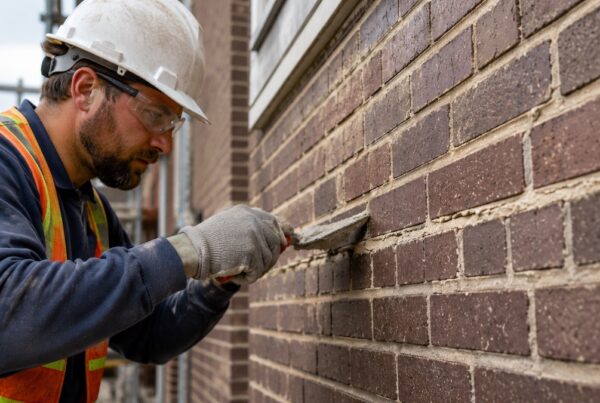
Repointing removes damaged mortar and replaces it with new mortar. It helps protect the wall from water intrusion and keeps the masonry stable.
Repointing is often a good option when the brick or block is still in usable condition, but the mortar joints have started to crack, crumble, or pull away.
The cost depends on wall size, joint depth, mortar condition, access, and whether the mortar needs special matching.
Tuckpointing
Tuckpointing is similar to repointing, but it often involves a more detailed finish. It can improve both the appearance and performance of a brick wall.
Tuckpointing may cost more than basic repointing because it requires more precision. Costs can increase when the wall is tall, the joints are badly deteriorated, the mortar needs careful matching, or the work requires scaffolding.
Brick Replacement
Brick replacement is necessary when individual bricks are cracked, loose, spalling, or damaged beyond repair. Spalling happens when the face of the brick breaks away, often because of moisture and freeze-thaw damage.
Brick replacement may be simple in small areas. It becomes more complex when the existing brick is older, hard to match, or part of a larger wall issue.
Concrete Block Repair
Concrete block, also called CMU, is common in commercial and industrial buildings. Block walls can crack, absorb moisture, shift, or suffer impact damage.
Repair costs depend on the size of the damaged area, wall function, access, and whether the issue is cosmetic or structural. If the wall supports a load or shows movement, the contractor may need a deeper inspection before pricing the work.
Facade Restoration
Facade restoration can include several types of work. A project may involve repointing, brick replacement, stone repair, sealants, flashing, lintel work, cleaning, and waterproofing details.
Because facade restoration often includes more than one repair type, it should be custom quoted after inspection. A contractor needs to understand what is failing, why it is failing, and how to repair it properly.
Parapet and Coping Repair
Parapets and coping systems sit at the roofline, where they face heavy exposure to wind, rain, snow, and ice. When these areas fail, water can enter the wall and travel downward.
Parapet repair may include repointing, rebuilding, coping replacement, flashing repair, or sealant replacement. Since this work happens at height, access and safety needs can affect the cost.
Structural Masonry Repair
Structural masonry repair requires careful evaluation. Signs of structural concern may include bowing walls, leaning sections, stair-step cracks, large cracks, loose masonry, or movement around openings.
These projects should not be priced with a simple square-foot number. They may require engineering, permits, shoring, or partial rebuilding. A custom inspection is the safest way to determine the right repair plan.
Related Reading – Common Commercial Masonry Mistakes + How to Avoid Them
Signs Your Commercial Building Needs Masonry Repair
You may need masonry repair if you notice:
- Cracked mortar
- Missing mortar
- Loose brick
- Spalling brick faces
- Stair-step cracks
- Bowing or leaning walls
- Rust stains near lintels
- White staining on masonry
- Interior water stains
- Gaps around windows or doors
- Damaged parapets
- Cracked coping
- Loose masonry near sidewalks or entrances
These signs do not always mean the building has a major structural issue. They do mean the wall should be inspected before the damage spreads.
Can You Delay Commercial Masonry Repairs?
Delaying masonry repairs can increase the final cost. Open joints, cracks, and failed sealants allow water into the wall. Once water gets inside, it can damage more brick, weaken mortar, stain interior finishes, and worsen during freeze-thaw cycles.
Delay can also create safety concerns. Loose brick, failing parapets, or unstable masonry near entrances, sidewalks, and parking areas should be addressed quickly.
If the damage is small, an early repair may prevent a larger restoration project later.
When Is the Best Time to Schedule Masonry Work in Michigan?
Spring, summer, and early fall are often better for planned exterior masonry work. Mortar needs suitable temperatures to cure properly, and crews can usually work more efficiently in stable weather.
Winter work may still be possible for urgent repairs, but cold weather can require extra planning. If your building already shows masonry damage, it is better to inspect it before winter makes the problem worse.
Property owners should also consider scheduling inspections after winter. This helps identify freeze-thaw damage before it spreads across the wall system.
How to Keep Masonry Costs Under Control
The best way to control masonry costs is to maintain the building before damage spreads.
Property owners and managers can reduce long-term repair costs by:
- Inspecting masonry after winter
- Repairing open mortar joints early
- Fixing roof drainage issues
- Keeping gutters and downspouts clear
- Repairing failed sealants
- Addressing water intrusion quickly
- Maintaining coping and flashing
- Bundling related repairs when practical
- Avoiding temporary patches that trap moisture
The cheapest repair is not always the best repair. A good masonry repair should solve the cause of the problem and protect the building for the long term.
Why a Site Inspection Matters
Online cost ranges can help with budgeting, but they cannot replace a site inspection. A contractor needs to see the wall, check access, review the material, inspect the mortar, and look for water movement or structural stress.
“The biggest cost mistake we see is treating masonry repair as a one-time fix instead of asking why the damage happened. A wall that keeps failing in the same spot almost always has a water problem behind it, not just a mortar problem.” — Leidal & Hart Team
A proper estimate should answer:
- What type of masonry is damaged?
- How large is the repair area?
- How deep is the damage?
- Is water causing the problem?
- Does the wall show movement?
- Will the work need lifts or scaffolding?
- Will the work affect entrances, tenants, sidewalks, or parking?
- Does the material need special matching?
- Are permits or engineering needed?
Without this information, any price is only a rough range.
Questions to Ask a Commercial Masonry Contractor
Before hiring a masonry contractor, ask:
- Have you worked on commercial buildings like ours?
- Will you inspect for water intrusion?
- Can you match the existing brick and mortar?
- What access equipment will the project require?
- Will the work affect tenants, customers, parking, or entrances?
- Are permits or engineering needed?
- What is included in the quote?
- How will you protect nearby sidewalks and work areas?
- How will you address the cause of the damage?
- Do you provide maintenance recommendations?
These questions help you compare estimates more accurately. A lower quote may not be better if it leaves out access, safety, water management, or proper material matching.
Commercial Masonry Cost FAQs
How much does commercial masonry repair cost in Michigan?
Commercial masonry repair can range from smaller repairs in the low thousands to larger custom-quoted restoration projects. Public cost guides list general brick repair at around $500 to $2,500 or $10 to $30 per square foot. Commercial projects can cost more when they involve height, difficult access, safety setup, structural issues, or water damage.
How much does tuckpointing cost for a commercial building?
Tuckpointing is commonly listed at around $5 to $25 per square foot. Commercial tuckpointing is often listed at around $5 to $25+ per square foot. Multi-story buildings, scaffolding, swing stages, detailed mortar matching, and severe deterioration can push the cost higher.
How much does repointing cost?
Public cost guides often list repointing at around $3 to $15 per square foot. The final cost depends on the wall size, joint depth, mortar condition, access, and whether the building needs special material matching.
Is masonry repair cheaper than replacement?
Masonry repair is usually cheaper than replacement when the wall is stable and the damage is limited. Replacement or rebuilding may be needed if the wall has severe deterioration, movement, unsafe masonry, or major moisture damage.
What is the most expensive part of commercial masonry work?
Labor, access equipment, scaffolding, safety setup, structural repairs, material matching, and water management details often drive the cost. Work at height usually costs more than ground-level repair.
How often should commercial masonry be inspected in Michigan?
Commercial masonry should be inspected at least once a year, especially after winter. Older buildings, parapets, and buildings with known water intrusion may need more frequent inspections.
Does insurance cover commercial masonry repair?
Insurance may cover masonry damage if it comes from a covered event. It may not cover wear and tear, deferred maintenance, or long-term water intrusion. Property owners should review their policy and speak with their insurance provider.
Conclusion: Get a Commercial Masonry Estimate in Michigan
Commercial masonry costs depend on the building, material, access, and repair scope. A small mortar repair, tuckpointing project, parapet issue, facade restoration, and structural wall repair all require different levels of planning.
The best way to understand your cost is to schedule a professional inspection. This helps identify the cause of the damage, the repair area, access needs, safety requirements, and the best long-term solution.
At Leidal & Hart, we help commercial property owners, facility managers, and building professionals understand what their masonry needs and why. Our team can inspect cracked mortar, damaged brick, parapet issues, water intrusion, and aging masonry so you can plan the right repair before the problem becomes larger and more expensive.