

Choosing the right masonry cement is one of those decisions in commercial construction that can quietly determine the long-term success of a project. While bricks and blocks may look solid on the surface, the mortar holding them together plays a critical role in strength, durability, and overall performance. Among the most commonly used options, Type S and Type N masonry cement often cause confusion—especially for commercial applications.
This guide breaks down the key differences between Type S and Type N masonry cement, explains where each should be used, and helps contractors, architects, and property owners make informed decisions for commercial construction projects.
What Is Masonry Cement?
Masonry cement is a specially formulated binding material used to create mortar for brick, block, and stone masonry. Unlike plain Portland cement, masonry cement includes additional ingredients that improve workability, bonding, and durability.
In commercial construction, masonry cement is essential for:
- Transferring loads between masonry units
- Accommodating minor movement without cracking
- Protecting walls from moisture intrusion
- Ensuring long-term structural integrity
Key Components of Masonry Cement
Most masonry cements contain:
- Portland cement for strength
- Lime or limestone for flexibility and workability
- Additives that enhance water retention, bonding, and consistency
The proportions of these components vary by type, which is what differentiates Type S from Type N.
Overview of Masonry Cement Types
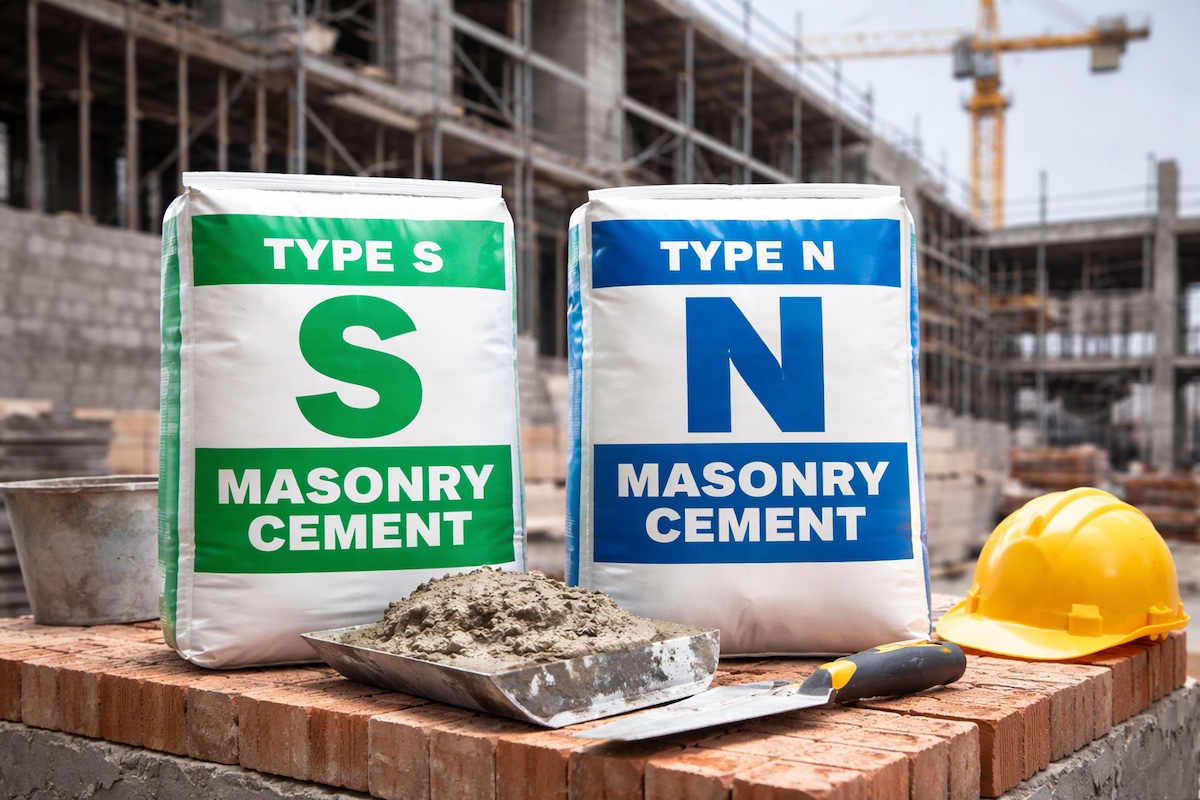
Masonry cement is classified under ASTM C91, which defines performance standards rather than exact mix ratios. The most common types include:
- Type M (highest strength)
- Type S (high strength)
- Type N (medium strength)
- Type O (low strength)
In commercial construction, Type S and Type N are by far the most widely used.
What Is Type S Masonry Cement?
Type S masonry cement is designed for high-strength and load-bearing applications, making it a preferred choice for structural masonry in commercial projects.
Composition of Type S Masonry Cement
Type S contains a higher proportion of Portland cement and less lime than Type N. This results in:
- Greater compressive strength
- Higher bond strength
- Increased resistance to lateral forces
Strength Characteristics of Type S
Type S mortar typically achieves a compressive strength of around 1,800 psi or higher. This level of strength makes it suitable for:
- Structural masonry walls
- Applications exposed to soil pressure
- Areas subject to high wind or seismic forces
Durability and Performance
Type S performs exceptionally well in demanding conditions, offering:
- Strong resistance to moisture penetration
- Better performance in freeze-thaw environments
- Improved durability for below-grade construction
Typical Commercial Applications of Type S
Type S masonry cement is commonly used for:
- Load-bearing walls
- Foundations and footings
- Retaining walls
- Manholes and utility structures
- Exterior masonry in harsh climates
What Is Type N Masonry Cement?
Type N masonry cement is a general-purpose option known for its balance between strength and workability. It is widely used in both residential and light commercial construction.
Composition of Type N Masonry Cement
Type N includes more lime than Type S, which:
- Improves workability
- Enhances flexibility
- Makes the mortar easier to tool and finish
Strength Characteristics of Type N
Type N mortar typically reaches a compressive strength of around 750 psi. While lower than Type S, this strength is sufficient for many non-structural applications.
Workability and Aesthetic Benefits
One of the biggest advantages of Type N is its ease of use. Contractors appreciate it because:
- It spreads smoothly
- It allows for clean tooling of joints
- It reduces fatigue during installation
Typical Commercial Applications of Type N
Type N is best suited for:
- Brick veneer systems
- Interior non-load-bearing walls
- Partition walls
- Restoration and repointing of older masonry
Type S vs Type N: Key Differences Explained
Understanding the differences between these two types helps ensure proper performance and code compliance.
Compressive Strength Comparison
The most significant difference is strength:
- Type S: High strength, suitable for structural applications
- Type N: Moderate strength, intended for non-structural use
Using Type N where structural strength is required can lead to failures and inspection issues.
Bond Strength and Adhesion
Type S provides stronger bonding between masonry units, which:
- Improves resistance to cracking
- Enhances wall stability under load Type N offers adequate bond strength for veneers but is not designed for heavy loads.
Durability in Harsh Environments
Type S outperforms Type N in:
- Below-grade applications
- High-moisture environments
- Areas with frequent freeze-thaw cycles
Type N performs well in protected, above-grade conditions where flexibility is more important than raw strength.
Workability and Ease of Application
Type N is easier to work with, especially for:
- Decorative masonry
- Detailed joint tooling
- Projects requiring a smooth finish
Type S is stiffer and requires more skill but delivers superior structural performance.
Cost and Material Efficiency
While Type S may cost slightly more, it can reduce long-term repair and maintenance costs in structural applications. Type N is often more cost-effective for veneers and interior work where high strength is unnecessary.
Choosing the Right Masonry Cement for Commercial Projects
Selecting the correct masonry cement depends on several project-specific factors.
Structural Requirements
Always consider whether the masonry is:
- Load-bearing
- Subject to lateral forces
- Supporting multiple stories
Structural applications typically require Type S.
Environmental and Site Conditions
Climate and exposure matter. Type S is better for:
- Exterior walls exposed to moisture
- Below-grade construction
- Commercial buildings in cold or wet climates
Type N works well for sheltered or interior applications.
Code Compliance and Engineering Specifications
Many commercial projects specify mortar type in the construction documents. Always follow:
- Engineer-of-record requirements
- Local building codes
- Manufacturer recommendations
Long-Term Performance and Maintenance
Using the correct mortar reduces:
- Cracking and joint failure
- Water infiltration
- Costly future repairs
Common Mistakes When Selecting Masonry Cement
Even experienced teams can make avoidable errors.
Using Type N Where Type S Is Required
This can compromise structural integrity and result in failed inspections or long-term performance issues.
Overusing Type S in Non-Structural Applications
Type S is not always better. Using it in veneers can reduce flexibility and increase cracking risk.
Ignoring Project-Specific Requirements
Every commercial project is unique. Blindly using one mortar type across all applications can lead to problems.
Best Practices for Mixing and Application
Proper installation is just as important as selecting the right cement.
Proper Mixing Ratios
Always follow manufacturer guidelines to ensure consistent strength and performance.
On-Site Quality Control
- Maintain consistent batches
- Monitor water content
- Avoid retempering mortar after it begins to set
Curing and Weather Considerations
Protect masonry during curing, especially in:
- Hot weather (prevent rapid drying)
- Cold weather (avoid freezing before strength develops)
FAQs About Masonry Cement Type S vs Type N
What is the main difference between Type S and Type N masonry cement?
The primary difference is strength. Type S is significantly stronger and used for structural applications, while Type N is designed for non-load-bearing masonry.
Which masonry cement is stronger, Type S or Type N?
Type S masonry cement is stronger and more durable than Type N.
Can Type N masonry cement be used for commercial buildings?
Yes, but only for non-structural elements such as veneers and interior walls.
Is Type S masonry cement required for load-bearing walls?
In most commercial cases, yes. Type S is commonly specified for load-bearing masonry.
Can Type S and Type N be used on the same project?
Yes, as long as each is used in the appropriate application and clearly identified during construction.
Which type is better for exterior commercial masonry?
Type S is generally preferred for exterior walls exposed to moisture and environmental stress.
Does using the wrong masonry cement affect inspections?
Yes. Using the incorrect mortar type can lead to failed inspections and costly rework.
Conclusion
Understanding the difference between Type S and Type N masonry cement is critical for successful commercial construction. Type S delivers the strength and durability required for structural and high-exposure applications, while Type N offers flexibility and workability for veneers and interior masonry. Choosing the right option protects your investment, ensures code compliance, and extends the lifespan of the building.
At Leidal & Hart, we work with commercial clients every day to ensure masonry systems are designed and constructed with the right materials for the job. From evaluating structural requirements to addressing site-specific challenges, our team understands how critical proper masonry selection is to long-term performance. If you’re planning a commercial masonry project and want expert guidance you can trust, Leidal & Hart is here to help you build with confidence.

